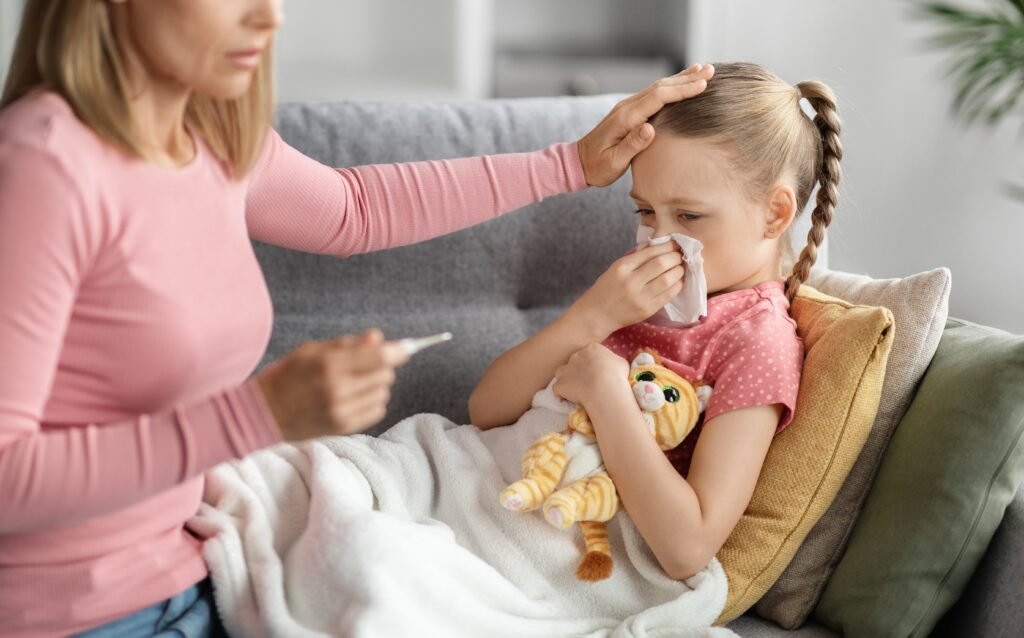
Every parent knows the feeling — school reopens, and within two weeks, half the class, including your own kid, is down with something. Understanding common childhood illnesses helps you recognize what’s typical, what needs a doctor’s visit, and honestly, what you can realistically do to reduce how often they happen.
My neighbor’s daughter went through what felt like a never-ending cycle of colds during her first year of school. Turned out this is completely normal — young immune systems are essentially “learning” through repeated exposure, even though it feels endless for exhausted parents.
Let’s go through what actually comes up most often, and what genuinely helps.
Common Cold and Upper Respiratory Infections
By far the most frequent among common childhood illnesses, especially in school-going children.
Children typically experience 6-8 colds per year on average, particularly common in the first few years of school as their immune systems are exposed to new viruses regularly.
Prevention tips:
Stomach Bugs and Gastroenteritis
Prevention largely comes down to proper food hygiene and handwashing, particularly before meals.
Ear Infections
Extremely common in younger children due to their shorter, more horizontal eustachian tubes.
Skin Conditions: Rashes and Allergic Reactions
[link to related article on symptoms you should never ignore here]
Chickenpox and Other Contagious Illnesses
Though vaccination has significantly reduced incidence, chickenpox and similar contagious illnesses still circulate.
Building Immunity Through Prevention, Not Isolation
This is worth emphasizing, since some parents overcorrect toward excessive isolation.
[link to related article on how to boost immune system naturally here]
Nutrition’s Role in Prevention
A child eating a genuinely varied, nutrient-rich diet tends to recover faster and get sick somewhat less often than one on a very restricted or processed-food-heavy diet.
[link to related article on diet chart for kids here]
When to See a Doctor
FAQ
Q: Is it normal for my child to get sick so often at school? Yes, frequent colds and minor illnesses during the early school years are genuinely normal as immune systems build exposure and memory.
Q: How can I reduce how often my child catches common childhood illnesses? Handwashing, adequate sleep, balanced nutrition, and staying current with vaccinations are the most effective, realistic prevention strategies.
Q: When should a fever in a child worry me? Any fever in infants under 3 months needs immediate medical attention; for older children, persistent high fever above 102°F warrants a doctor’s visit.
Q: Are common childhood illnesses more frequent in daycare settings? Yes, close contact in group settings does increase exposure, though this also helps build immune resilience over time.
Q: Should I keep my sick child completely isolated from other kids? During clearly contagious periods, yes, but excessive isolation beyond that isn’t necessary or particularly beneficial for long-term immune development.
Conclusion
Dealing with common childhood illnesses is, frankly, just part of parenting, especially during the early school years when exposure to new germs happens constantly. Focus on realistic prevention — good hygiene habits, balanced nutrition, adequate sleep, and staying current on vaccinations — rather than trying to eliminate every possible germ. Most of these illnesses resolve on their own with basic care; trust your instincts, and don’t hesitate to call your pediatrician when something feels genuinely off.
Suggested Alt Text: