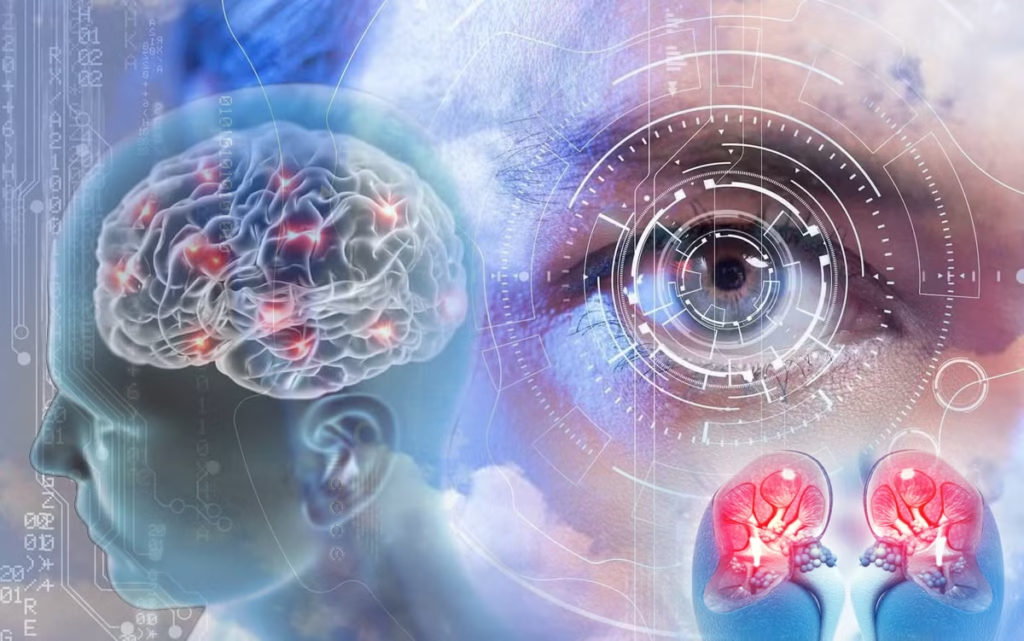
A radiologist reviewing hundreds of scans a day, looking for subtle patterns that might indicate early-stage cancer — it’s exhausting, genuinely error-prone work, no matter how skilled the doctor. AI in disease diagnosis is increasingly stepping in as a support tool here, not to replace doctors, but to catch patterns human eyes sometimes miss after the hundredth scan of the day.
I found this topic genuinely fascinating while researching it — the technology has moved well past the hype-heavy headlines from a few years back into actual, measurable clinical use in several hospitals now, including some in India.
Let’s look at where this technology actually stands today.
How AI Assists in Diagnosis
Understanding the basic mechanism helps make sense of where AI in disease diagnosis genuinely adds value.
AI in disease diagnosis primarily works by analyzing large volumes of medical imaging, lab data, or patient history to identify patterns associated with specific conditions, often flagging potential concerns for a human doctor’s review rather than making autonomous diagnostic decisions.
This human-in-the-loop approach remains the standard, and genuinely important, model in clinical practice today.
Areas Where AI Shows Genuine Promise
AI’s Role in Early Disease Detection
One of the more genuinely valuable applications of AI in disease diagnosis involves catching conditions earlier than traditional methods might.
[link to related article on early signs of illness here]
Limitations Worth Understanding
Despite genuine progress, it’s important to stay realistic about current limitations.
AI in Personalized Treatment Planning
Beyond diagnosis, AI increasingly supports treatment decisions too.
[link to related article on how to read blood test report here]
What This Means for Patients Today
The Future Direction of AI in Healthcare
[link to related article on best health tracking apps here]
FAQ
Q: Can AI in disease diagnosis replace doctors entirely? No, current and foreseeable applications support doctors’ decision-making rather than replacing the clinical judgment and patient relationship a doctor provides.
Q: Is AI in disease diagnosis available in Indian hospitals currently? Yes, several major hospitals have begun implementing AI-assisted diagnostic tools, particularly in radiology and diabetic eye screening.
Q: How accurate is AI compared to human doctors for diagnosis? Accuracy varies by specific application and condition; in some narrow, well-studied areas like certain imaging analyses, AI has shown comparable or occasionally superior pattern detection to human review alone.
Q: Are there privacy concerns with AI in disease diagnosis? Yes, genuinely important ones — patient data used to train and run these systems requires strict privacy protections, an area still evolving in regulatory frameworks.
Q: Should I be concerned if my doctor uses AI tools during diagnosis? Not inherently — these tools generally serve as additional support for your doctor’s judgment, though it’s reasonable to ask questions about how they’re being used in your care.
Conclusion
AI in disease diagnosis represents a genuinely significant shift in healthcare, though it’s important to understand it as a support tool augmenting doctors’ expertise rather than a replacement for human medical judgment. The technology shows particular promise in imaging analysis and early disease detection, areas where pattern recognition across large datasets provides real clinical value. As this technology continues developing, staying informed as a patient — and asking your doctor questions when curious — genuinely helps you engage more actively with your own healthcare decisions.
Suggested Alt Text: