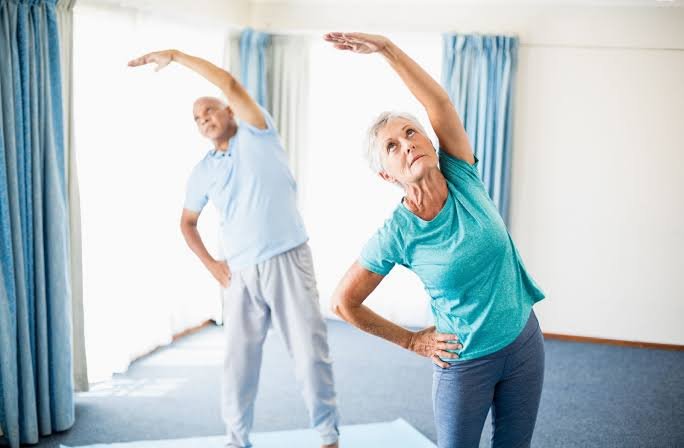
There’s this outdated idea that older adults should slow down and rest more as they age. In reality, appropriate exercises for seniors are exactly what helps maintain independence, balance, and quality of life well into later decades — inactivity, not activity, is usually what causes decline.
My uncle, now in his late 60s, started a simple exercise routine three years ago after struggling to get up from low chairs comfortably. Today he moves noticeably better than he did in his late 50s, honestly, purely because he stayed consistent.
Let’s look at what genuinely helps, and how to start safely.
Why Exercise Matters More, Not Less, With Age
Muscle mass naturally declines with age if not actively maintained, a process called sarcopenia, similarly affecting bone density and balance.
Regular exercise for seniors, including strength training and balance work, has been shown to reduce fall risk by up to 40% while also improving cardiovascular health and cognitive function.
This makes appropriate exercises for seniors genuinely protective, not just beneficial in a general sense.
Strength Training for Seniors
Contrary to outdated assumptions, strength training is both safe and highly beneficial for most older adults, even those starting for the first time.
Start with 2 sessions weekly, focusing on proper form over heavy resistance.
Balance Exercises
Balance-focused exercises for seniors are among the most directly effective at reducing fall risk.
[link to related article on fall prevention for elderly here]
Low-Impact Cardiovascular Exercise
Flexibility and Mobility Work
Starting Safely If New to Exercise
Picture someone who hasn’t exercised in years jumping straight into an ambitious routine out of enthusiasm — this often backfires through injury or excessive soreness, discouraging continued effort. Gradual progression genuinely works better long-term.
Group Classes and Social Benefits
[link to related article on signs of anxiety disorder here]
Building a Realistic Weekly Routine
A genuinely sustainable structure for exercises for seniors might look like:
FAQ
Q: What if I have arthritis or joint pain — can I still exercise? Yes, low-impact exercises for seniors like swimming, walking, and gentle strength training often help manage arthritis symptoms rather than worsening them.
Q: How often should seniors exercise each week? Most guidelines recommend at least 150 minutes of moderate activity weekly, spread across several days rather than done all at once.
Q: Is it too late to start exercising in your 70s or 80s? Not at all — research consistently shows meaningful strength and balance improvements are achievable even when starting exercise for the first time in later decades.
Q: Should seniors avoid weight training entirely? No, appropriately supervised weight training is both safe and genuinely beneficial for most older adults, contrary to common assumptions.
Q: How do I know if I’m overdoing it with exercise? Persistent pain (not just mild soreness), excessive fatigue lasting days, or dizziness during exercise are signs to scale back and consult a doctor.
Conclusion
The right exercises for seniors genuinely make the difference between maintaining independence and gradually losing it — and it’s honestly never too late to start, regardless of current fitness level. Begin with something manageable this week, whether that’s a 15-minute walk or a few chair squats while watching TV. Consistency, even in small doses, builds real strength and confidence over the coming months.
Suggested Alt Text: